
Home Cardio Equipment: The Complete Buyer’s Guide & Comparison
Home Cardio Equipment: The Complete Buyer’s Guide & Comparison
Choosing the right cardio machine for your home is a significant decision. It involves balancing budget, space, fitness goals, and personal preference. The wrong choice becomes a costly clothes rack. The right one becomes the cornerstone of your health. This guide provides a comprehensive, neutral comparison of all major home cardio equipment types. We will analyze stationary bikes, treadmills, ellipticals, rowers, and stair climbers. You will learn their unique benefits, key trade-offs, and which machine aligns with your specific situation. Our goal is to equip you with the knowledge to make a confident, long-term investment in your fitness.
The best home cardio equipment for you depends on your primary fitness goals, available space, budget, and joint health. For low-impact, high-intensity training, a stationary bike or elliptical is ideal. For weight-bearing calorie burn, a treadmill is superior. For full-body engagement, a rowing machine is unmatched. This guide will detail each category, from basic upright bikes to advanced connected treadmills. We provide direct comparisons on cost, footprint, workout style, and maintenance. By the end, you will know exactly which machine type fits your home and your ambitions.
Understanding Your Core Fitness Objectives
Before examining any machine, define your purpose. Equipment is a tool to achieve a goal. A vague goal leads to a poor purchase. Be specific about what you want to accomplish. Are you training for a running event, managing weight, rehabbing an injury, or building general cardiovascular health? Each objective steers you toward different equipment.
Weight loss requires consistent calorie expenditure. While any cardio machine can contribute, some are more efficient. A treadmill typically burns more calories per minute than an elliptical at a similar perceived effort because it engages more muscle mass against gravity. Still, a high-quality rower provides an intense full-body workout that can rival a treadmill’s calorie burn. For joint-friendly consistency, an elliptical or stationary bike allows for frequent, longer sessions with minimal impact, which can lead to greater weekly volume.
If you are preparing for a specific sport, sport-specific training is crucial. Runners need a treadmill. Cyclists need a stationary bike. The movement pattern should mirror your activity. For general fitness and heart health, variety and enjoyment are paramount. You are more likely to use a machine you enjoy. Consider if you prefer standing, sitting, or a combination. Do you need entertainment like a large screen, or are you content with a simple console? Your honest answers here will filter your options effectively.
The Comprehensive Cardio Equipment Comparison
This table provides a high-level overview of the primary home cardio machines. Use it as a starting point for your evaluation.
| Equipment Type | Primary Benefit | Best For | Average Cost Range (USD) | Space Required (LxW, approx.) | Impact Level | Key Consideration |
|---|---|---|---|---|---|---|
| Treadmill | High calorie burn, sport-specific running training. | Runners, high-intensity interval training (HIIT), weight loss. | $600 – $4,000+ | 78" x 36" | High | Requires sturdy construction; motor power (CHP) is critical. |
| Elliptical | Low-impact, full-body motion. | Joint health, steady-state cardio, full-body engagement. | $500 – $3,500+ | 70" x 30" | Low | Strive length and motion feel vary greatly; test if possible. |
| Stationary Bike (Upright) | Efficient cycling posture, compact size. | Cyclists, HIIT, small spaces, budget-conscious buyers. | $300 – $2,000 | 48" x 24" | Very Low | Seat comfort can be an issue; mimics outdoor bike geometry. |
| Stationary Bike (Recumbent) | Very low impact, back support. | Rehabilitation, seniors, those with back issues, comfort-focused users. | $500 – $3,000 | 65" x 30" | Very Low | Larger footprint; less core engagement than upright models. |
| Rowing Machine | Ultimate full-body workout. | Strength-endurance, full-body conditioning, efficient workouts. | $500 – $2,500+ | 96" x 24" (stored: ~48"x24") | Low | Technique is vital; poor form reduces effectiveness and risks injury. |
| Stair Climber (Stepper) | High intensity, targets glutes/legs. | Leg strength and endurance, high calorie burn in short time. | $400 – $3,000+ | 40" x 30" | Medium-High | Can be monotonous; limited upper body involvement. |
Deep Dive: Stationary Bikes for Home Use
Stationary bikes are a cornerstone of home fitness due to their low impact, quiet operation, and space efficiency. They fall into three main categories: upright, recumbent, and indoor cycling (spin) bikes. Each serves a distinct user profile.
Upright bikes position you similarly to a standard bicycle. They are compact and excellent for high-intensity intervals. The primary drawback is seat discomfort for some users, though many seats are replaceable. Recumbent bikes feature a bucket seat with back support and pedals positioned in front of you. This design is exceptionally gentle on the back, hips, and knees. It is the premier choice for rehabilitation or prolonged, comfortable cardio sessions. Still, it engages the core less and occupies more floor space.
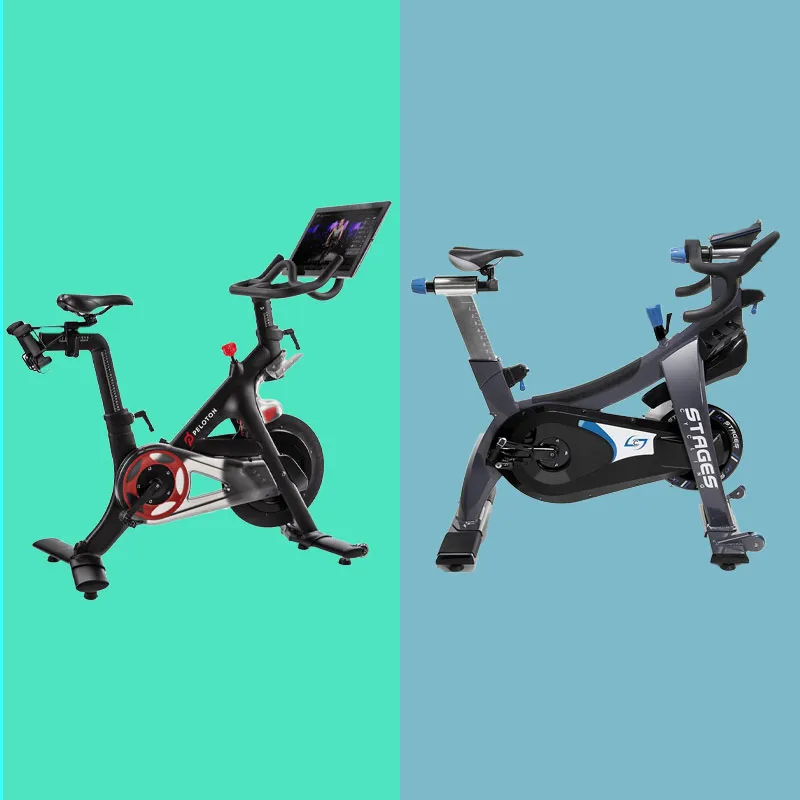
Indoor cycling bikes, like those from Peloton or NordicTrack, are a subset of upright bikes built for performance. They have a heavy flywheel for a smooth, road-like feel, a friction or magnetic resistance system, and a geometry designed for aggressive riding positions. These bikes are ideal for those following structured classes or seeking a studio-style workout at home. They often come with integrated touchscreens and subscription services. For a detailed analysis of features, resistance types, and fit, our dedicated How to Choose a Stationary Bike: A Buyer's Guide for Home Gyms provides an essential checklist.
Deep Dive: Treadmills for Home Use
Treadmills are the most popular home cardio machine for a reason. They facilitate a natural, weight-bearing exercise that burns calories effectively. The critical factor is quality. A cheap treadmill with a weak motor is unsafe, unpleasant to use, and prone to breakdown.
Focus on continuous horsepower (CHP), not peak horsepower. For walking, a 2.0 CHP motor is a minimum. For running, seek 3.0 CHP or higher. The deck size matters, especially for runners. A belt surface of at least 55 inches long and 20 inches wide is suitable for walking. Runners should look for a belt 60 inches long or more. Cushioning systems vary by brand and help reduce joint impact. Always check the machine’s maximum user weight capacity and choose one that exceeds your weight by at least 50 pounds for durability.
Folding treadmills save space but ensure the mechanism is robust and easy to operate. Non-folding models are generally more stable. Modern treadmills offer extensive programming, heart rate monitoring, and often large touchscreens with streaming services. Remember, a treadmill is a significant mechanical device. Regular upkeep is non-negotiable for safety and longevity. Our How to Maintain Your Home Treadmill or Exercise Bike: A Simple Guide outlines the necessary maintenance routine.
Deep Dive: Ellipticals and Cross-Trainers
Ellipticals, sometimes called cross-trainers, provide a unique low-impact, weight-bearing motion. Your feet remain on pedals throughout the stride, eliminating the jarring heel strike of running while still engaging leg muscles extensively. Many models incorporate moving handlebars for upper body involvement, creating a true full-body workout.
When evaluating an elliptical, stride length is the most important specification. A short stride feels cramped and unnatural. For users under 5’10”, a 18-20 inch stride may suffice. For taller users, a stride of 20 inches or more is critical for comfort. The motion path—whether it is a simple oval or a more complex ramp—affects the feel. Some premium models offer adjustable ramps to target different muscle groups. Drive position—front, center, or rear—affects the machine’s footprint and motion feel. Rear-drive models often provide a more vertical, stair-climbing motion, while front-drive ellipticals can feel more horizontal.
Advanced hybrid machines, like the Arc Trainer or Adaptive Motion Trainer (AMT), offer adjustable stride motion. These can mimic everything from a stepper to a cross-country skier, providing exceptional variety from a single machine. They are typically higher-end investments but eliminate workout monotony.
Deep Dive: Rowing Machines and Stair Climbers
Rowing machines offer perhaps the most comprehensive cardio workout available. A proper rowing stroke engages approximately 85% of your body’s muscles—legs, core, back, and arms. This leads to a tremendous calorie burn and builds muscular endurance. The learning curve is steeper than other machines. Proper sequencing (legs, then hips, then arms) is essential to avoid back strain and maximize power. There are four resistance types: air, water, magnetic, and hydraulic piston. Air and water rowers provide a dynamic resistance that increases with your effort, closely simulating on-water rowing. Magnetic rowers are quieter and offer consistent, adjustable resistance.
Stair climbers, or steppers, are less common in home gyms but are incredibly efficient for lower body conditioning. They specifically target the glutes, quadriceps, and calves. The motion is inherently high-intensity, making it excellent for short, metabolic workouts. Mini steppers with independent pedals are compact and affordable but lack the stability and full range of motion of a commercial-style stair climber with linked steps. The workout can become repetitive, so they are best for those who integrate them into circuit training or enjoy focused leg days.
Evaluating Space, Budget, and Long-Term Value
Your physical and financial space dictates realistic options. First, measure your dedicated floor area. Remember to account for clearance around the machine for safe mounting, dismounting, and movement. A folding treadmill may seem space-saving, but you still need room to use it when unfolded. A rower stores vertically but requires ceiling height and floor space to tip it up.
Budget extends beyond the purchase price. Consider these layers:
1. Machine Cost: Set a realistic range. You often get what you pay for in terms of durability, stability, and features.
2. Delivery & Assembly: Large equipment often incurs freight delivery and white-glove setup fees, which can add hundreds of dollars.
3. Subscription Services: Many connected fitness machines require a monthly subscription ($15-$50) to access their full library of classes and content.
4. Maintenance Costs: Belts, batteries, and lubricants are recurring costs. Higher-quality machines typically have lower long-term maintenance needs. A proactive approach is detailed in our Stationary Bike Maintenance Guide: Keep Your Home Cardio Equipment Running.
5. Warranty: This is a key indicator of quality. Look for a lifetime warranty on the frame, 3-5 years on parts, and at least 1 year on labor. A short warranty often signals planned obsolescence.
Long-term value is determined by usage. The most expensive machine is worthless if you do not use it. The perfect machine is the one you will consistently enjoy for years. For help planning your entire workout area, our Home Cardio Gym Setup: Budget, Space, and Equipment Planning Guide offers a structured approach.
Technology and Connected Fitness Integration
The rise of connected fitness has transformed home equipment. Interactive screens, live and on-demand classes, and virtual competition are now standard features on mid-to-high-tier models. This technology can dramatically increase engagement and motivation. Brands like Peloton, NordicTrack (iFit), and Hydrow have built entire ecosystems around their content.
When evaluating tech, consider the user interface. Is the screen responsive? Is the content library diverse and high-quality? Most importantly, what is the ongoing subscription cost, and is it mandatory for basic machine operation? Some machines become “dumb” without a subscription, losing access to resistance control and basic programs. Others simply lose the interactive classes but remain fully functional. This is a critical distinction.
Beyond subscriptions, look for practical tech features: Bluetooth connectivity for heart rate monitors and headphones, USB charging ports, built-in fans, and compatibility with third-party apps like Zwift (for cycling and running). These features enhance the experience without locking you into a single content provider.
Making Your Final Decision: A Step-by-Step Checklist
Use this actionable checklist to finalize your choice.
1. Confirm Your Goal: Write down your primary objective (e.g., “run a 5K,” “lose 20 pounds,” “low-impact daily movement”).
2. Audit Your Space: Measure length, width, and height. Mark the area with tape on the floor.
3. Set Your Total Budget: Include a buffer for delivery, assembly, and potential accessories (mat, weights, fan).
4. Prioritize Must-Have Features: List 3-5 non-negotiable features (e.g., “minimum 3.0 CHP motor,” “stride length over 20 inches,” “Bluetooth connectivity”).
5. Research Specific Models: Read expert reviews and user testimonials for 2-3 models in your chosen category. Pay attention to complaints about noise, durability, and customer service.
6. Test If Possible: Visit a fitness equipment store to try the motion. Feel the build quality.
7. Review Warranty & Return Policy: Understand what is covered and for how long. Note the return window and who pays for return shipping.
8. Plan for Maintenance: Acknowledge the upkeep required. Schedule a reminder for your first lubrication or inspection.
9. Pull the Trigger: Purchase from a reputable dealer. Opt for professional assembly if you are not mechanically inclined.
Conclusion: Investing in Your Health Journey
Selecting home cardio equipment is a personal investment with long-term health dividends. There is no single “best” machine, only the best machine for you. By systematically evaluating your goals, constraints, and preferences against the detailed profiles of each equipment type, you move from uncertainty to confidence. The ideal machine fits your body, your space, your budget, and—most importantly—your lifestyle. It should invite you to workout, not intimidate you.
Remember, consistency trumps intensity. The most sophisticated treadmill is ineffective if it goes unused. Choose the tool that you will enjoy using regularly. That consistent use, supported by a balanced fitness plan as explored in our pillar on Cardio vs. Strength Training for Fat Loss: The Best Balance, is what delivers real, lasting results. Begin your search with clarity, and you will find a machine that serves you well for thousands of miles, strides, or strokes to come.
Frequently Asked Questions (FAQ)
What is the best home cardio machine for weight loss?
The treadmill generally offers the highest calorie burn per minute due to its weight-bearing nature. However, the most effective machine is the one you use consistently. For many, a low-impact elliptical or stationary bike allows for longer, more frequent sessions, leading to greater weekly calorie expenditure. Incorporating interval training on any machine boosts fat-burning efficiency.
Is an elliptical or a stationary bike better for bad knees?
Both are excellent low-impact options. A recumbent stationary bike is often the best choice for significant knee issues, as it provides full back support and places the least stress on the knee joint. An elliptical is also knee-friendly but involves a standing, weight-bearing motion that may not be suitable for all conditions. Consult with a physical therapist for personalized advice.
How much should I spend on a quality home treadmill?
For a durable treadmill capable of sustained running, plan to invest at least $1,500 to $2,500. In this range, you will find motors with 3.0+ continuous horsepower, decent cushioning, and sturdy construction. Budget models under $1,000 often have weaker motors, shorter decks, and shorter warranties, making them risky for runners but potentially acceptable for walkers.
Can I get a full-body workout with a rowing machine?
Yes, a rowing machine provides one of the most complete full-body cardiovascular workouts available. A proper rowing stroke sequentially engages the major muscles of the legs, core, back, and arms. This comprehensive muscle recruitment leads to high calorie burn and improves both cardiovascular endurance and muscular strength. Correct technique is essential to maximize benefits and ensure safety.
References
– American Council on Exercise – Calorie Burn Calculator
– Consumer Reports – Treadmill Buying Guide
– Mayo Clinic – Exercise: 7 benefits of regular physical activity
– National Academy of Sports Medicine – The Benefits of Rowing
– U.S. Department of Health & Human Services – Physical Activity Guidelines for Americans