
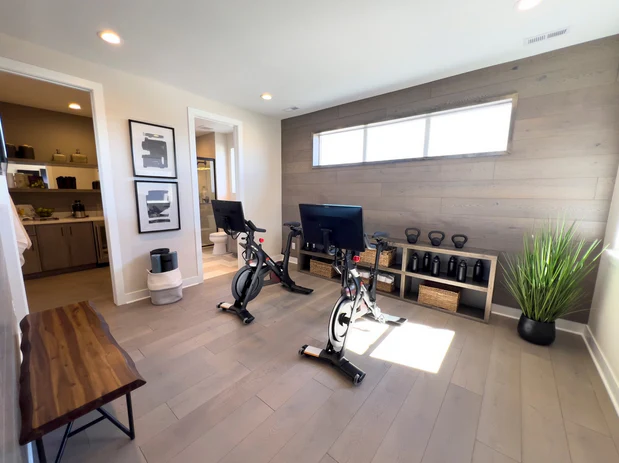
How to Set Up a Small Space Cardio Corner in Your Apartment
Creating a High-Performance Cardio Corner in Your Small Apartment
You want a consistent cardio routine, but your apartment feels more like a shoebox than a fitness studio. The perceived conflict between effective exercise equipment and limited living space stops many urban dwellers before they start. You do not need a dedicated room or a basement to build a sustainable fitness habit. A strategic, well-planned cardio corner can fit into a studio, a one-bedroom, or even a shared living space without dominating it. This guide provides a complete system for selecting, arranging, and utilizing space-efficient cardio equipment to create a permanent, high-functioning workout zone in your apartment. The solution combines intelligent equipment choices with multi-functional furniture and strategic planning to maximize every square inch.
The core principle is intentional design over random placement. A successful small-space cardio corner is a dedicated zone that supports your fitness goals without compromising your living environment. It requires you to assess your actual space with precision, choose equipment based on footprint and storage potential, and implement solutions for noise, flooring, and motivation. This process transforms an underutilized corner into a powerful asset for your health. For a broader understanding of how different machines serve various fitness objectives, our comprehensive Cardio Equipment Guide: Choosing the Best Machines for Home & Gym offers foundational knowledge.
The Foundational Step: Conducting a Spatial Audit
You cannot plan effectively without accurate data. Begin by measuring your potential workout area. Do not estimate. Use a tape measure and record the length, width, and, critically, the height of the space. Note permanent obstructions like baseboard heaters, air conditioning units, low-hanging light fixtures, or sloped ceilings. These elements will dictate what equipment can physically fit.
Next, analyze the space’s function and traffic flow. Is the corner in your living room, bedroom, or a hallway nook? How do people move through this area daily? Your cardio corner should not block primary pathways or create a perpetual obstacle. Identify a zone that is naturally less trafficked, perhaps behind a sofa, adjacent to a closet, or in an alcove. Consider vertical space as your greatest ally. Equipment that folds flat against a wall or can be stored vertically opens up the floor for other uses when you are not exercising.
Finally, assess the structural and environmental factors. What type of flooring is present? Hardwood, laminate, and tile require protective mats to prevent damage and reduce vibration. Carpet may need a solid platform for stability. Check the proximity to neighbors; placing a machine on a shared wall or above a downstairs unit requires careful consideration of noise mitigation, a topic covered in depth in our guide on How to Soundproof Your Home Cardio Gym: Apartment & Condo Solutions. This audit provides the non-negotiable constraints for all subsequent decisions.
Selecting Equipment: The Space-Smart Hierarchy
With your spatial constraints defined, you can evaluate equipment through a lens of efficiency. The ideal machine for a small apartment offers a high calorie burn and cardiovascular benefit relative to its footprint, features easy storage, and operates quietly. The following hierarchy prioritizes these attributes.
Tier 1: Ultra-Compact and Storable Options
This tier includes equipment with minimal permanent footprint, often designed to be stored in a closet, under a bed, or behind a door.
Jump Ropes: The ultimate space-efficient tool. A quality weighted jump rope provides an intense cardio workout, improves coordination, and stores anywhere. It requires only enough vertical clearance to swing the rope safely.
Resistance Bands with Cardio Tabs: Bands are not just for strength. Attach a door anchor and perform resisted marches, jogging in place, or cross-country simulations. They create virtually zero noise and pack into a drawer.
Compact Steppers: Modern mini-steppers, like the Sunny Health & Fitness SF-B0418, have a footprint smaller than a suitcase and can be tucked away. They offer low-impact vertical motion ideal for HIIT intervals.
Folding Treadmills: Not all treadmolds are created equal. Seek models specifically engineered for small spaces, such as the NordicTrack Commercial 1750 or Sole Fitness F63. These feature hydraulic folding mechanisms and wheels for easy vertical storage. Always verify the folded dimensions against your ceiling height and storage space.
Tier 2: Moderate Footprint with High Stability
These items take up more floor space but are generally stable, quiet, and do not require complex storage.
Stationary Bikes (Upright and Indoor Cycles): Bikes like the Schwinn IC4 or Bowflex C6 have a relatively small base, are inherently quiet, and can often be moved on transport wheels. Their narrow profile allows them to slide into a corner seamlessly.
Ellipticals with a Small Stride: Front-drive ellipticals often have a more compact design than rear-drive models. Look for units with a short stride length (under 18 inches) and a narrow Q-factor (the distance between pedals) to reduce side-to-side space needs.
Rowing Machines with Vertical Storage: The concept2 Model D rower is the benchmark here. While its in-use length is significant, it separates into two pieces and stores vertically, leaning against a wall and occupying a footprint of just about 2′ x 2′. This makes it uniquely suitable for small spaces despite its performance capabilities. For a detailed analysis of its calorie-burning potential compared to other machines, see our comparison of Treadmill vs. Rowing Machine: Which Burns More Calories in 2024?.
Tier 3: Space-Dedicated Performance Machines
This tier is for those who can permanently allocate a defined area, typically a 4′ x 6′ rectangle or larger.
Standard Treadmills: Non-folding treadmills offer more robust construction and often larger decks but demand a permanent home. They are the least flexible option for tight spaces.
Arc Trainers and Total-Body Ellipticals: These machines provide excellent workouts but have larger, non-storable frames best suited for dedicated home gym areas.
The following table summarizes key considerations for the most space-viable categories:
| Equipment Type | Approx. In-Use Footprint | Storage Method | Noise Level | Best For Apartments With… |
|---|---|---|---|---|
| Folding Treadmill | 30" x 70" | Folds vertically, wheels for moving | Moderate-High | High ceilings, closet or wall space for storage, ground-floor units. |
| Stationary Bike | 24" x 48" | Wheels for relocation, some fold | Low | Any space; excellent for all floor levels due to low impact/noise. |
| Compact Elliptical | 22" x 55" | Some front-drive models fold | Low-Moderate | Limited side-to-side space; users prioritizing low-impact motion. |
| Rowing Machine | 24" x 96" | Breaks down, stores vertically (~24"x24") | Low (fan whoosh) | Enough wall space for vertical storage; users wanting full-body engagement. |
| Mini Stepper | 16" x 22" | Carry to closet or under bed | Very Low | Minimal permanent space; budget-conscious setups; supplemental cardio. |
The Multi-Functional Furniture Strategy
Your cardio corner should not exist in a vacuum. In a small apartment, every element should serve multiple purposes. This philosophy extends to your workout zone’s supporting infrastructure.
The Storage Ottoman/Seat: A large, sturdy ottoman placed next to your equipment serves as a seat for putting on shoes, a step for warm-ups or box jumps, and hidden storage for resistance bands, yoga mats, heart rate monitors, and cleaning supplies.
The Wall-Mounted Utility Rack: Install a pegboard or slat wall system (like IKEA’s SKÅDIS) on the wall adjacent to your equipment. This holds headphones, towels, a tablet for streaming workouts, a small speaker, and even the power cord for your machine when not in use. It keeps essentials accessible and off the floor.
The Fold-Down Work Surface: If your corner is in a living area, consider a wall-mounted, fold-down shelf. When up, it is flush with the wall. When down, it provides a stable surface for a laptop, water bottle, and notebook to track workouts. This eliminates the need for a separate stand or table.
The Decorative Room Divider: A stylish screen or a tall, open bookshelf can visually separate your cardio corner from the main living space. The bookshelf provides storage for items unrelated to fitness, making the area feel integrated rather than intrusive.
Flooring and Protection: Non-Negotiable Investments
Protecting your apartment and your security deposit is paramount. The right flooring solution dampens sound, protects your subfloor, and provides a stable, safe surface.
A high-density rubber mat is the universal standard. It should be at least 1/2 inch thick to absorb impact and vibration. For most cardio equipment, a mat measuring 3′ x 6′ provides adequate coverage. For rowers or larger setups, a 4′ x 8′ mat may be necessary. Interlocking rubber tiles offer modularity and can be configured to fit odd-shaped corners precisely.
Place the mat before assembling your equipment. Ensure it lies completely flat with no curled edges to prevent tripping. For extra noise isolation, especially in multi-unit buildings, consider a two-layer system: a noise-dampening underlayment (like Regupol) topped with your rubber mat. This combination significantly reduces structure-borne noise transmitted to neighbors below.
Optimizing Your Layout for Flow and Safety
Arrangement is more than just fitting a machine into a space. It is about creating a safe and ergonomic environment.
Maintain a minimum 24-inch clearance on all operational sides of your equipment. This is the safety zone for mounting, dismounting, and emergency stops. For a treadmill, this clearance is especially crucial behind the machine in case of a fall. Never place a treadmill where the back is flush against a wall or furniture.
Consider sightlines and motivation. Positioning your bike or treadmill to face a window, a television, or an inspiring piece of art can improve workout adherence. If facing a wall, use the wall-mounted system for a tablet or a mirror. A mirror is not merely for vanity; it allows you to check your form on exercises like step-ups or band work, preventing injury.
Manage your cords meticulously. Use heavy-duty Velcro straps or cord channels to secure the power cord and any accessory cables along the wall or leg of the machine. A tangled cord nest is a tripping hazard and makes cleaning difficult.
Integrating Technology and Motivation Systems
A small space must compensate with smart technology to keep you engaged. Since you may not have space for multiple machines, digital variety is key.
Interactive Fitness Platforms: Subscribe to a service like Peloton App, iFIT, or Apple Fitness+. These platforms offer thousands of guided classes for bikes, treadmills, rowing, and floor-based cardio. They transform your single machine into a portal for diverse workouts, from scenic rides to high-intensity intervals.
The Central Device Mount: Invest in a universal holder that securely attaches your tablet or phone to your equipment. This ensures your screen is at eye level, promoting good posture. For bikes and treadmills, many third-party mounts work with non-branded machines.
Wireless Audio Solutions: Bone conduction headphones (like Shokz OpenRun) are an excellent choice for apartment workouts. They leave your ears open to hear ambient noises—a doorbell, a phone, or unusual sounds from your equipment—while delivering clear audio. They also avoid the sweat and discomfort of in-ear buds during long sessions.
Smart Lighting: A simple, smart bulb in a nearby lamp can be programmed to your workout routine. A bright, cool light for high-energy sessions, a softer light for recovery rides. This environmental cue helps signal to your brain that it is time to focus.
Operational Protocols for Apartment Living
Respect for shared living spaces is integral to long-term success. Establish quiet hours for your workouts, avoiding early mornings or late nights if you have neighbors sharing walls or ceilings. Place your rubber matting diligently to absorb impact.
Maintenance is not just about longevity; it is about noise prevention. A well-maintained machine operates more quietly. Regularly tighten bolts, lubricate belts or rails as the manufacturer instructs, and keep the area clean from dust buildup. For specific guidance on keeping your primary equipment silent and smooth, our Stationary Bike Maintenance Guide and general maintenance article provide detailed protocols.
Finally, manage your airflow. A small corner can become hot and stuffy. Use a dedicated fan—a compact oscillating model or a powerful floor fan—to keep air circulating. This improves comfort and performance significantly.
Evolving Your Corner with Your Fitness
Your cardio corner is not static. As your fitness level changes, your equipment needs may evolve. The modular approach advocated here allows for adaptation.
You may start with a mini stepper and resistance bands. After six months, you might replace the stepper with a folding treadmill, using the same floor mat and storage ottoman. The wall-mounted system remains, now holding treadmill-specific accessories. Perhaps you add a heart rate monitor to your setup and begin tracking your effort more precisely, using methods outlined in our guide on How to Calculate Your Cardio Calorie Burn for Weight Loss Goals.
The principle is to build a system*, not just install a machine. This system—defined by measured space, protective flooring, multi-functional furniture, and smart tech—can support any cardio equipment you choose over time. It turns a constraint into a creative framework for health.
Conclusion: Redefining Your Space
Creating a cardio corner in a small apartment is an exercise in intentional design. It proves that spatial limitations need not be a barrier to achieving cardiovascular fitness. By executing a precise spatial audit, selecting equipment based on a space-smart hierarchy, and implementing a multi-functional support system, you claim a permanent zone for your well-being. This dedicated corner becomes a testament to prioritization, a daily reminder that your health fits into your life, no matter the square footage. It transforms underutilized space into a powerful, personal health asset.
For the next step in your planning journey, from budgeting to final layout, explore our comprehensive Home Cardio Gym Setup: Budget, Space, and Equipment Planning Guide. Return to our central Cardio Equipment Guide: Choosing the Best Machines for Home & Gym to deepen your understanding of how your chosen machine supports your specific fitness objectives. Begin your audit today—measure your corner, and start designing the workout space you deserve.
Frequently Asked Questions
What is the absolute smallest piece of effective cardio equipment for an apartment?
A weighted jump rope is the most space-efficient tool. It requires minimal storage, provides a high-intensity workout, and improves coordination. Ensure you have adequate vertical clearance (typically about 9 feet) to swing the rope safely without hitting lights or ceilings.
Can I put a treadmill on the second floor of my apartment building?
Yes, but it requires careful planning. Choose a folding treadmill for flexibility and place it perpendicular to the floor joists for better weight distribution. Use a high-quality, thick rubber mat combined with a noise-dampening underlayment to absorb impact and vibration. Always inform your landlord and check your lease agreement for specific clauses about heavy equipment.
How do I choose between a bike and an elliptical for a very small space?
Evaluate your space constraints and personal needs. A stationary bike generally has a narrower profile and is quieter, making it ideal for tight corners and multi-story buildings. A compact elliptical offers a weight-bearing, low-impact workout but may require more side-to-side space. Assess the exact footprints and consider trying both at a fitness retailer.
What should I do if I have literally no floor space to spare?
Fully embrace vertical and hidden storage. Focus on equipment that disappears when not in use: a foldable wall-mounted bike like the JLL Foldable Exercise Bike, a resistance band system stored in a drawer, or a mini stepper kept under your bed. Your “corner” becomes a temporary setup you deploy only during workout sessions.
References
– Sunny Health & Fitness SF-B0418 Mini Stepper Product Details
– NordicTrack Commercial 1750 Treadmill Specifications
– Sole Fitness F63 Treadmill Specifications
– Schwinn IC4 Indoor Cycling Bike Details
– Bowflex C6 Bike Specifications
– Concept2 Model D Rowerg Product Info
– IKEA SKÅDIS Pegboard System
– Shokz OpenRun Bone Conduction Headphones