
How to Soundproof Your Home Cardio Gym: Apartment & Condo Solutions
The Complete Guide to Soundproofing Your Home Cardio Gym for Apartments and Condos
Your downstairs neighbor just texted you. Again. Your early morning treadmill session, intended to boost your health, is instead straining your relationship with the entire building. This common dilemma stops many apartment and condo dwellers from creating a home cardio gym. The solution is not to abandon your fitness goals but to implement a strategic sound management plan. You can significantly reduce exercise noise through a combination of equipment selection, acoustic treatment, and behavioral adjustments. This guide provides a comprehensive, room-by-room framework to transform your workout space into a considerate neighbor, ensuring your fitness routine enhances your life without disrupting others.
Effective soundproofing for a home cardio gym requires understanding the different types of noise your equipment generates and employing targeted solutions for each. The process involves three core principles: decoupling vibrations from the building structure, adding mass to block airborne sound, and absorbing reverberant noise within the room. Success depends on a layered approach, starting with the quietest equipment you can afford and building your acoustic defenses from the floor up. By investing in these solutions, you protect your lease, maintain neighborly peace, and create a more focused workout environment. For a broader view of setting up a successful home fitness space, our foundational Home Cardio Gym Setup: Budget, Space, and Equipment Planning Guide covers the essential planning stages.
Understanding the Noise You Generate: Impact vs. Airborne Sound
Before purchasing a single acoustic panel, you must diagnose the problem. Cardio equipment creates two primary noise types, each requiring a different solution.
Impact noise, or structure-borne vibration, is your biggest adversary in multi-unit buildings. This is the deep, rhythmic thud transmitted through floors and walls. It occurs when your treadmill motor vibrates or your foot strikes the deck, sending energy directly into the floor joists. This vibration travels astonishingly far through a building’s skeleton, often feeling louder to the neighbor below than it does in your own room. Impact noise is the most frequent cause of noise complaints.
Airborne noise is the sound that travels through the air, like the whirring of a bike’s flywheel, the hum of a motor, or the sound from your television. While still disruptive, it is generally easier to mitigate than impact vibration. Reverberation is a subset of airborne noise; it is the echo and “boominess” within your room caused by sound waves reflecting off hard surfaces like concrete floors, drywall, and windows. Treating reverberation makes your space sound quieter and more pleasant, and it prevents that amplified noise from leaking out.
Strategic Equipment Selection: The First Line of Defense
The most effective soundproofing measure is choosing inherently quiet equipment. This decision, made during the planning phase, reduces the need for extensive and costly remediation later.
Stationary bicycles and ellipticals are typically the best choices for multi-unit dwellings. Magnetic resistance systems are almost silent, generating only a gentle whir from the flywheel. Their motion is smooth and low-impact, producing minimal vibration. When selecting a bike, look for a solid, weighted frame; a heavier unit is less likely to “walk” or vibrate during intense sprints. Our detailed Stationary Bike vs. Elliptical: Which is Better for Your Home Gym? comparison can help you decide between these two quiet options.
Treadmills present the greatest challenge due to their high-impact nature. Yet, not all treadmills are equal. Seek models designed for home use with robust motor enclosures and sound-dampening technology. A continuous-duty motor rated at 3.0 CHP or higher will operate with less strain and noise than an underpowered motor. Foldable treadmills often have lighter decks that transmit more vibration; a non-folding, solid-deck model is preferable for noise control. Remember, a quieter machine is a critical investment for apartment living.
Rowers and stair climbers fall in the middle. Air and water rowers generate a distinctive “whoosh” that is airborne and can be managed with acoustic panels. Hydraulic piston stair climbers can create squeaking sounds, while spiral-step models like a StairMaster are often quieter but produce more motor hum. Always check manufacturer decibel ratings and read user reviews specifically mentioning noise in multi-story homes.
The Foundation of Silence: Flooring Solutions for Impact Noise
Your floor is the primary transmission path for impact vibration. A proper flooring system does two things: it decouples the equipment from the subfloor and adds mass to dampen vibration.
A professional-grade, high-density rubber gym floor is the single best investment. Look for interlocking tiles at least 3/4-inch thick with a high rubber content. These tiles provide excellent shock absorption, prevent equipment movement, and add significant mass. They are also durable and easy to clean. For a treadmill, a 4’x6’ area of these tiles is a minimum.
Beneath the rubber, add a dedicated acoustic underlayment. Products like Regupol Sonus or Impactoflor are engineered for this purpose. These are dense, rubberized mats that further decouple vibrations. The ideal assembly (from bottom to top) is: existing floor > acoustic underlayment > 3/4-inch rubber tiles > your equipment.
For a more budget-conscious approach, a layered DIY solution can work. Start with a carpet remnant (pad included), topped with EVA foam puzzle mats (often sold as children’s play mats), and finish with horse stall mats from a farm supply store. This combination provides decoupling, mass, and a stable surface. Ensure the total assembly is at least 1.5 inches thick.
| Flooring Solution Tier | Typical Materials | Estimated Cost (for 4'x6' area) | Best For |
|---|---|---|---|
| Professional | Acoustic underlayment + 3/4" commercial rubber tiles | $400 – $700 | Heavy treadmills, serious lifters, maximum noise reduction |
| Enhanced DIY | Carpet pad + EVA foam mats + 3/4" rubber stall mats | $200 – $350 | Most cardio equipment, good balance of cost and performance |
| Basic Barrier | Interlocking EVA foam gym mats (1/2" or thicker) | $80 – $150 | Stationary bikes, ellipticals, low-impact equipment |
Isolation pads are a critical final component. Place dedicated vibration-damping pads under each foot of your treadmill, elliptical, or bike. These are typically made of high-density cork or rubber with a sorbothane top layer. They act as shock absorbers, preventing the last bit of vibration from transferring into your flooring system. Do not skip this step.
Containing the Sound: Wall and Door Treatments for Airborne Noise
Once vibration is controlled, address the sound escaping through walls, windows, and doors. The goal here is mass and sealing gaps.
Solid core doors are essential. The standard hollow-core interior door is a terrible sound barrier. Replacing it with a solid wood or solid-core composite door adds significant mass, blocking sound transmission. Install acoustic weatherstripping around the door frame and a automatic door sweep at the bottom to seal the perimeter gaps. This single upgrade can dramatically reduce noise leakage into hallways.
Windows are a major weak point. If replacing them with double or triple-pane acoustic windows is not feasible, use heavy, sound-absorbing curtains. Thermal blackout curtains with a dense, woven backing can help. For a more effective solution, consider acoustic window inserts—clear plexiglass panels that create an air gap between themselves and the existing window.
Walls themselves can be treated. If you own your condo and are renovating, adding mass-loaded vinyl (MLV) inside the wall cavity before drywall is the gold standard. For renters or a simpler solution, adding a second layer of drywall with Green Glue damping compound in between is highly effective. These are permanent solutions.
For non-permanent treatments, focus on acoustic panels. These are not soundproofing panels—they will not stop sound from leaving the room. Instead, they absorb reverberation inside the room, preventing sound from building up and making it easier to contain. Place thick fabric-wrapped fiberglass or mineral wool panels at the first reflection points (opposite your speakers) and on the ceiling if possible. This creates a “dead” room acoustically, which feels quieter and reduces the overall noise level that can potentially escape.
Operational Strategies and Behavioral Adjustments
Your workout habits are as important as your physical setup. Intelligent scheduling and technique can minimize disruption.
Establish and respect a “quiet hours” schedule for high-impact activity. Avoid using treadmills or engaging in loud HIIT sessions early in the morning or late at night. Mid-morning or early evening are often more acceptable. Inform your immediate neighbors about your gym and your intended workout times. This proactive communication builds goodwill and allows them to provide feedback before frustration sets in.
Modify your workout form. On a treadmill, try to land mid-foot with a softer stride rather than a heavy heel strike. This reduces impact noise. Keep your volume at a reasonable level, or better yet, use bone conduction headphones or high-quality earbuds. This contains all entertainment noise to your personal space.
Regular equipment maintenance is a non-negotiable aspect of noise control. A well-maintained machine operates more smoothly and quietly. A squeaky belt, a dry deck, or loose bolts on a treadmill will generate excessive noise. Follow a strict lubrication and bolt-tightening schedule as outlined in our Stationary Bike Maintenance Guide: Keep Your Home Cardio Equipment Running. The same principles of care apply to all cardio machinery.
Room-by-Room Implementation Plan
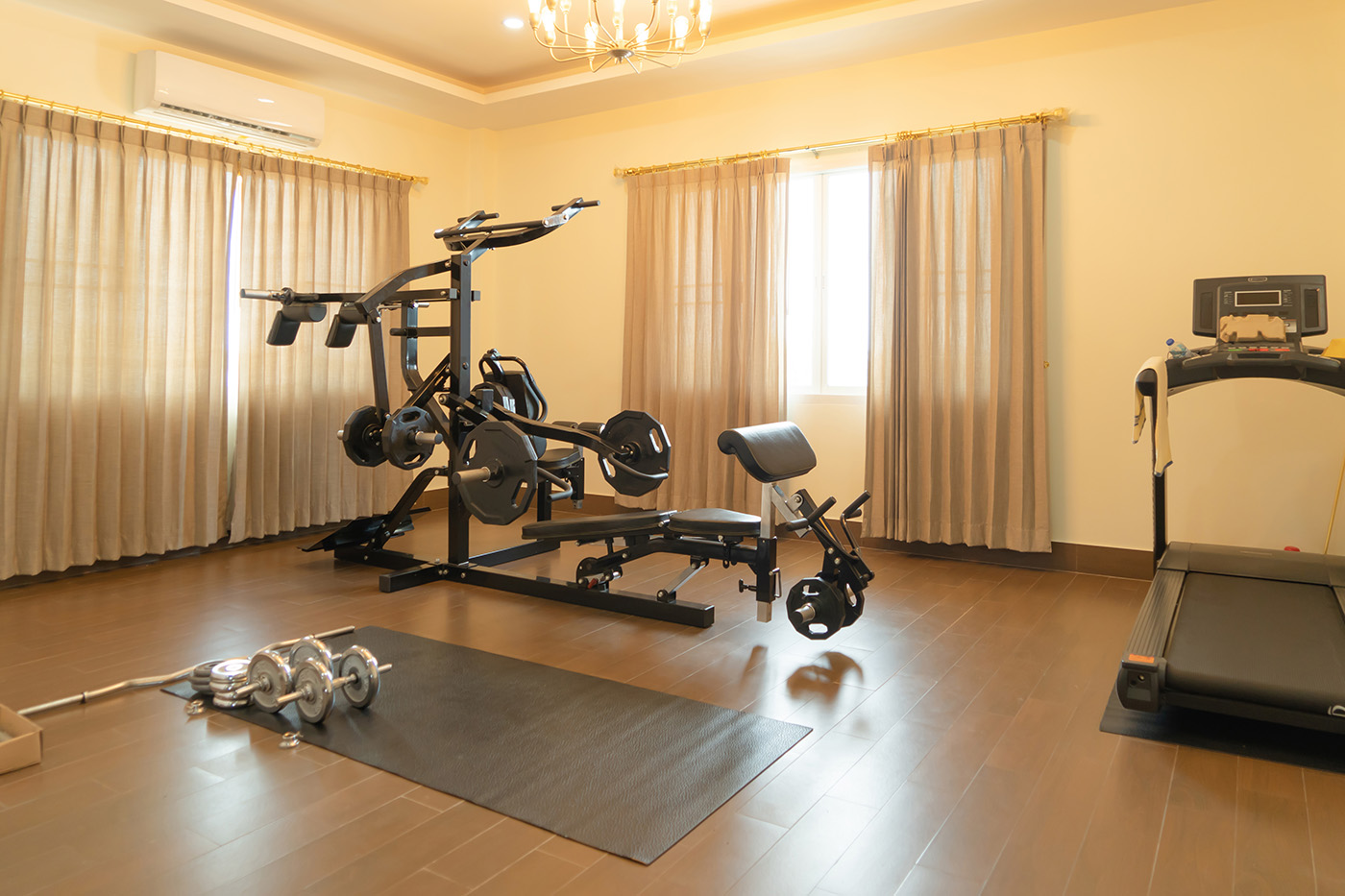
The Dedicated Spare Room or Den: This is the ideal scenario. Implement the full professional flooring system. Treat all walls with acoustic panels to manage reverberation. Install a solid core door with full perimeter sealing. You have the most control here to create a near-professional environment.
The Living Room or Multi-Purpose Space: Aesthetics matter more. Use an enhanced DIY flooring system with interlocking rubber tiles that look neat. Keep equipment on a dedicated mat that can be partially concealed. Use attractive, framed acoustic panels that blend with your decor. Focus heavily on containing sound with a solid core door to the hallway.
The Bedroom Corner: Space is limited. Prioritize a quiet machine like a bike or elliptical. Use a single, high-quality equipment mat with isolation pads. Place a thick area rug over the mat if possible. Use a room divider or heavy curtain to visually and somewhat acoustically separate the gym area. Headphone use is mandatory.
The Basement or Garage (in condos): These are often the best locations structurally. Concrete slabs transmit impact noise laterally, so a proper flooring system is still vital to protect neighbors in adjacent units. Focus on insulating the door to the main living space and treating walls shared with other units. Airborne noise can still travel through ductwork, so manage reverberation within the space.
Measuring Your Success and Troubleshooting
After implementing your solutions, conduct a sound test. Have a friend operate your equipment at a normal workout intensity. Go to the hallway outside your door, then to the room directly below or adjacent (with your neighbor’s permission). Listen for low-frequency thumping (impact) and general operational hum (airborne).
If impact noise persists, your flooring decoupling is insufficient. Re-examine your mat system. Ensure isolation pads are correctly placed under every equipment foot. You may need to add more mass, such as a second layer of rubber tiles.
If airborne noise is the issue, check for gaps. Run your hand around the door perimeter to feel for drafts, which indicate sound leaks. Seal them. Add more absorption inside the room with additional acoustic panels, especially in room corners where low frequencies build up.
For motor whine or belt squeal, refer to maintenance guides. A persistent mechanical noise often points to a need for lubrication, belt adjustment, or professional servicing. A quiet machine is a well-maintained machine.
Building a Sustainable, Considerate Home Gym
Creating a quiet home cardio gym in an apartment or condo is an exercise in consideration and engineering. It requires an upfront investment of time and resources, but the payoff is long-term peace—both yours and your neighbors’. The process demystifies acoustic control, turning it from a mysterious art into a series of logical, actionable steps.
Start with intelligent equipment choice, build a robust floor defense, contain sound through doors and walls, and adopt considerate workout habits. This layered approach ensures your fitness journey supports your health without compromising your living situation. Each element you add contributes to a more stable, professional, and sustainable workout environment.
Your home gym should be a sanctuary, not a source of anxiety. By taking responsibility for the noise you generate, you earn the freedom to exercise on your own schedule, indefinitely. For the next steps in building a comprehensive home fitness ecosystem, from selecting your primary equipment to planning your workout regimen, return to the master blueprint in our Home Cardio Gym Setup: Budget, Space, and Equipment Planning Guide. Your journey to fitter, quieter fitness starts with a single, well-insulated step.
Frequently Asked Questions
What is the single most effective product for reducing treadmill noise for downstairs neighbors?
A professional-grade, high-density rubber floor tile system at least 3/4-inch thick, combined with dedicated equipment isolation pads. This combination directly attacks impact vibration, which is the primary source of neighbor complaints. The rubber mass absorbs and dampens the shock, while the pads decouple the machine from the floor, preventing the transfer of energy into the building’s structure.
Can I use regular carpet or rug pads under my equipment for soundproofing?
Standard carpet and pad offer minimal impact noise reduction. They lack the necessary density and mass to effectively dampen vibrations from heavy cardio equipment. While better than bare floor, they are a weak solution. For meaningful results, you need materials engineered for acoustic damping, such as mass-loaded vinyl underlayment or specialized rubber mats designed for gym use.
Are there any quiet treadmills suitable for second-floor apartments?
Yes, but “quiet” is relative. Look for treadmills with powerful, continuous-duty motors (3.0+ CHP), fully enclosed decks with sound-dampening technology, and a solid, non-folding construction. Brands often market “apartment-friendly” models. Always check decibel ratings and seek out user reviews from people in multi-unit dwellings. Remember, even the quietest treadmill requires a proper acoustic flooring system.
How much does it typically cost to soundproof a home gym room in a condo?
Costs vary widely based on solutions. A basic setup with interlocking foam mats and door seals may cost under $150. A comprehensive professional approach with acoustic underlayment, rubber tiles, wall panels, and a solid core door can exceed $1,500. Most effective DIY layered solutions (stall mats, acoustic pads, sealing) typically fall in the $300-$600 range, representing a strong balance of performance and investment.
References
– Acoustical Surfaces: Gym Floor Soundproofing
– The Spruce: How to Soundproof a Room
– Soundproof Cow: Mass Loaded Vinyl
– Consumer Reports: How to Choose a Treadmill
– National Wood Flooring Association: Impact Noise Control